

INTERNAL CASE STUDY · AJICA × CODEX
A booking service built with Ajica and Codex
Web and native Android clients, one shared backend, and a task history that included bug fixes and acceptance checks.
Claims project · 24–26 October 2026 · Published 2 November 2026
- Completed cards, as reported
- 28 / 28
- Executable tasks
- 23
- Development workstreams
- 4
An internal pilot using Ajica’s built-in meeting-room template. Results below come from the owner’s case report. A person set the goal, prepared the plan and resumed work after pauses.
One service. Two clients. Shared bookings.
The report describes a React Web client and a native Android Compose client sharing a FastAPI and PostgreSQL backend. A booking created in either client was available in the other.
The demo covered three meeting rooms and two demonstration profiles: a room catalog, schedule, booking form with participants and a description, personal bookings and owner cancellation.
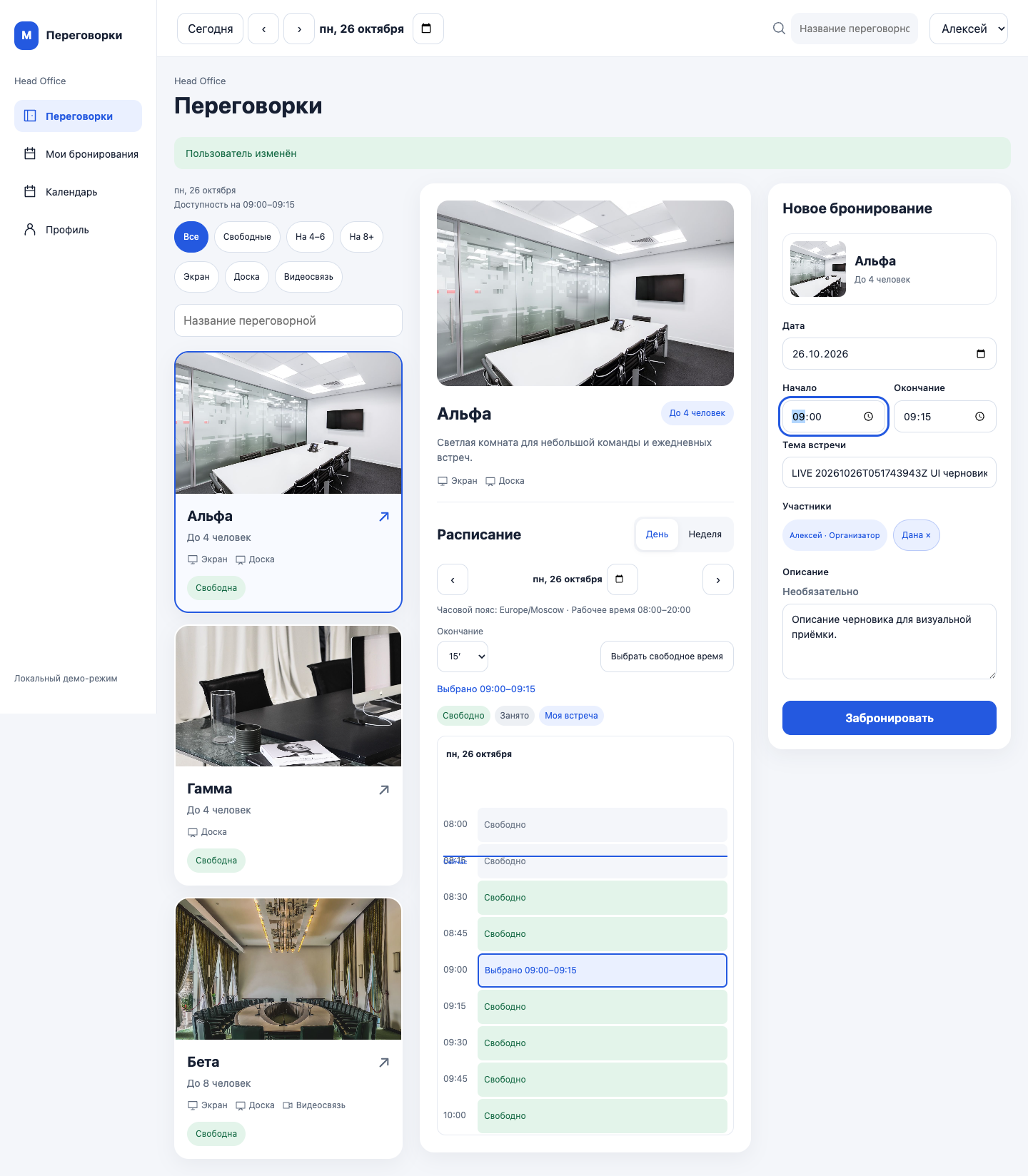
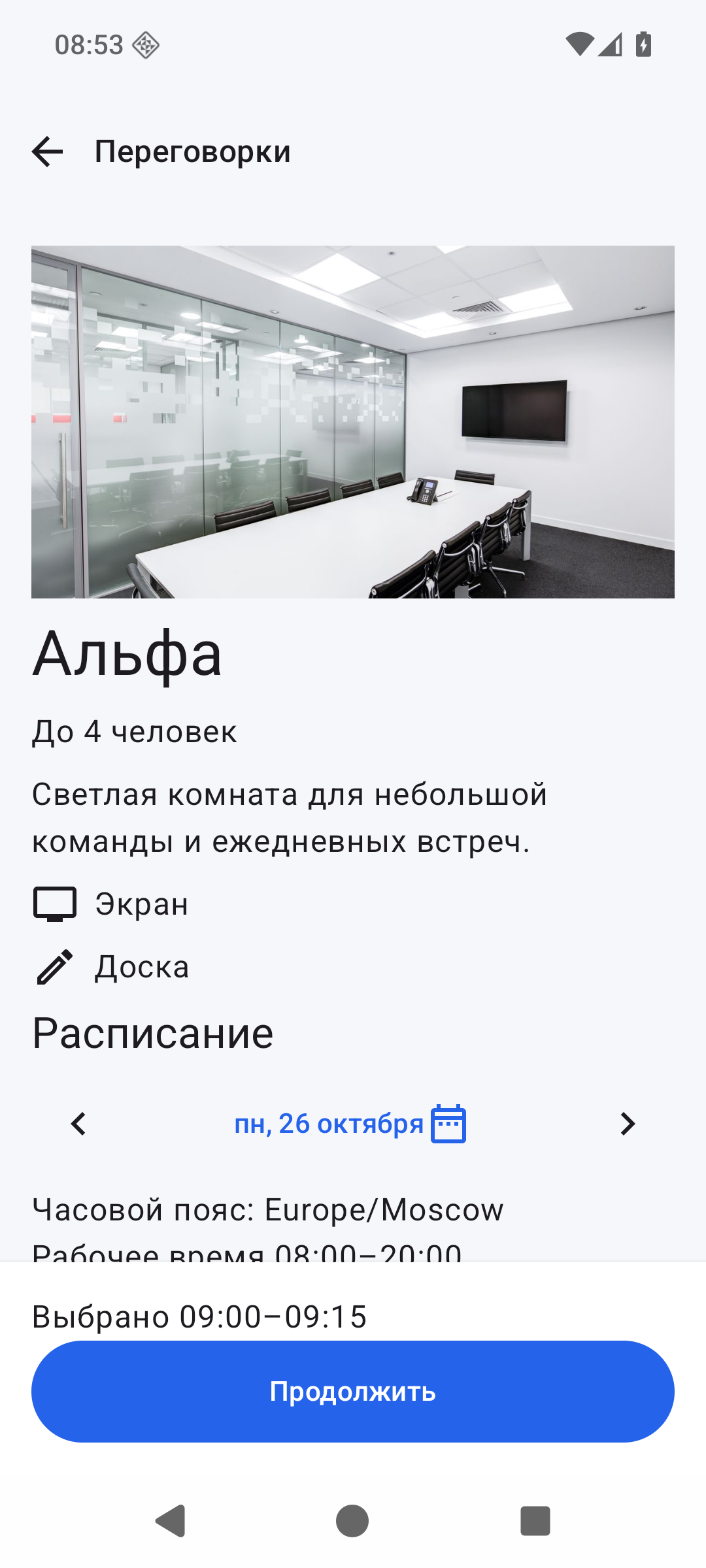
Original screenshots extracted from the supplied report without retouching. They show the booking service, not Ajica’s interface. The demo screens retain their original Russian text; select an image to view it at full size.
The report records delivery of source code, an Android APK, Docker setup, startup instructions and acceptance evidence. The result was a local demonstration; there was no public production launch or remote CI run.
A plan that included correction cycles.
Work covered API, data and UI contracts, four development workstreams—Web, Android, Backend and Infra—then integration and acceptance. The report records 28 completed cards and 23 executable tasks.
The current built-in template also documents 23 executable tasks and five epic containers. Those containers organize work; they are not five additional coding tasks. The current template is a planning reference, not a reconstruction of the exact historical run.
Four workstreams describe the shape of the work. The report does not establish a fixed agent count, measured concurrency or productive hours spent.
A Web interval bug, reopened and corrected
An incorrect time interval reached the room-availability request. According to the report, the Codex agent reopened the task, corrected interval handling, preserved the booking draft and ran regression checks.
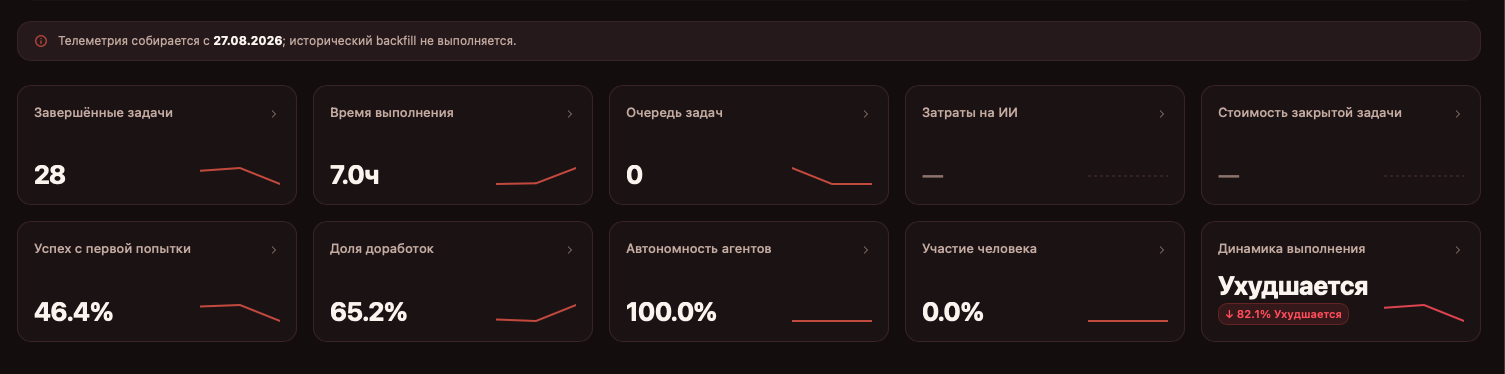
Across the pilot, 15 of the 23 executable tasks went through rework: 65.2% after rounding. The case includes the correction cycle rather than presenting every task as an immediate first-pass success.
What local acceptance checked.
The case report records the following outcomes for its local acceptance scenarios. These historical checks were not independently rerun for this article.
- Shared booking data
- Bookings created in Web were available in Android, and vice versa.
- Competing reservations
- In the tested race, one request succeeded and the other returned HTTP 409.
- Cancellation ownership
- A different user’s cancellation request returned HTTP 403.
- Persistence after seed and restart
- Two seed runs and a restart preserved all nine checked records, including fields and history.
The report lists Backend 82, Web unit 31, Android unit 67 and Infra 16 checks. Separately: 22 Web live checks, three Android device checks and one Android live check.
These are reported suite counts, not a coverage percentage, a new test run or a production reliability guarantee.
Read the metrics with their definitions.
Ajica’s dashboard showed 100% agent autonomy and 0% human participation for the recorded execution. That metric describes activity recorded in Ajica; it does not account for every action outside the system.
Human involvement remained part of the pilot: setting the goal, preparing the plan and resuming work after pauses. The dashboard figure does not mean zero human involvement.
Cycle time and first-pass denominators
The reported 7.04-hour average was the cycle time of 23 started cards, including pauses. It was not the total development time of the service or a count of productive hours.
The 46.4% first-pass dashboard figure used another denominator: 13 of all 28 cards, including five epic containers. It is not the first-pass rate of the 23 executable tasks.
AI cost, budget savings, productive hours and speed compared with a human team were not measured. No such comparisons are inferred from this pilot.
An attributed internal case.
Source: the owner-provided four-page Ajica × Codex report for the Claims local demo, 24–26 October 2026. It contains client screenshots, a dashboard snapshot and a summary of the recorded acceptance.
The owner confirmed that the referenced source history and metrics files have not survived. A fresh audit of those raw records was therefore not possible. This is an internal template pilot, not an independent customer testimonial or a production benchmark.
Read the original case report (PDF, Russian, 1.7 MB)
English adaptation prepared with AI assistance on 2 November 2026. Historical outcomes are attributed to the report; they were not independently rerun for this page. The report documents Codex and does not establish a Claude Code result or the historical use of MCP.
Start with a small, observable pilot.
Choose a bounded task, define the behavior you will check and keep the decisions, corrections and acceptance on the board. Start with the Codex setup or the guide to planning work across coding agents.